


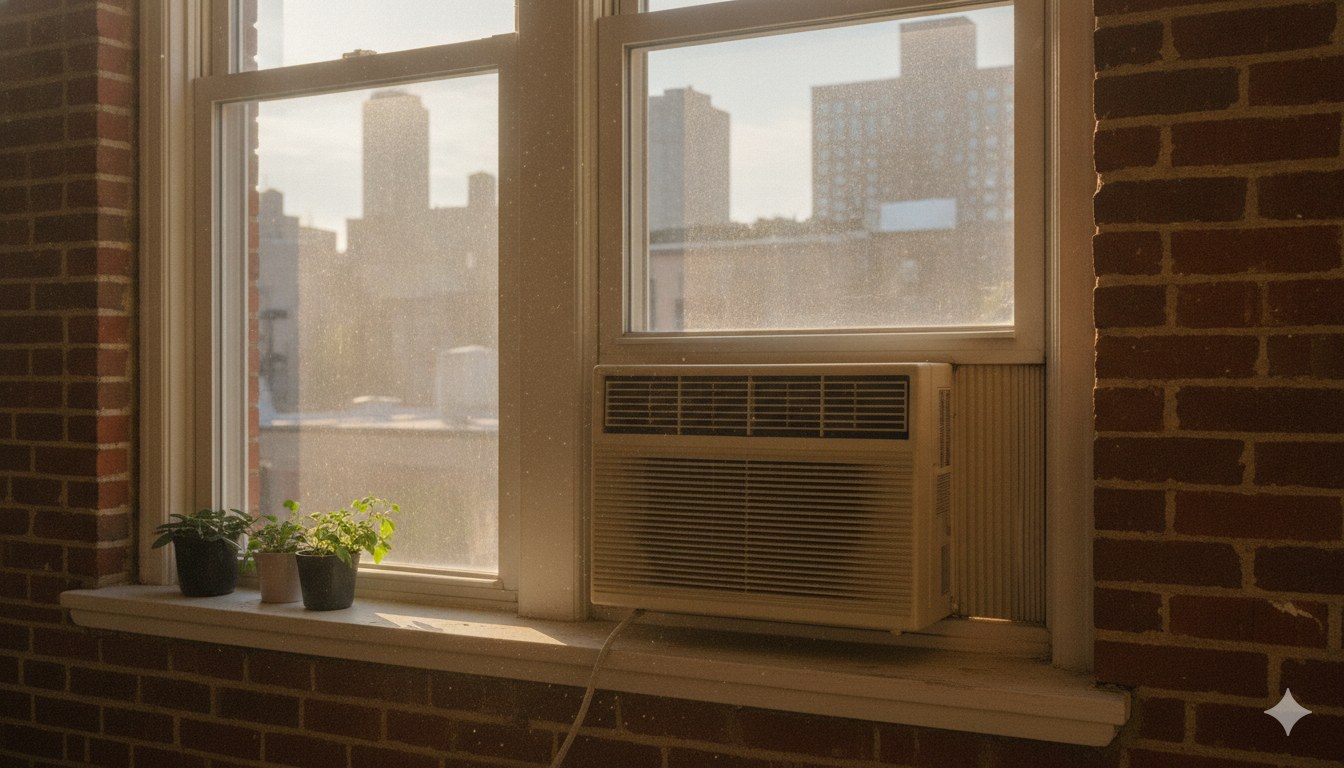
Every June in New York City, something predictable happens: the temperature climbs, the humidity rolls in off the harbor, and millions of window air conditioners get switched on for the first time since October. Most of them haven't been touched since last fall.
Our Everneat cleaning crews see the inside of these units regularly — not because we're HVAC technicians, but because window AC maintenance is part of a thorough summer apartment clean. What we find, honestly, surprises even longtime New Yorkers: drip trays pooling with black water, filters so choked with dust they look like felt, and fins coated in a fine layer of whatever New York City's air carried in over the past twelve months. In a few apartments — usually pre-war buildings in Washington Heights or Bushwick where the humidity is relentless and the walls are thick — we've found mold colonizing the back of a unit so thoroughly you could smell it the moment you walked into the bedroom.
This is not a lecture. It's a heads-up. Here's what to know, and what to do about it before this summer's heat index makes you regret it.
Most American cities deal with general humidity. New York adds a few layers on top of that.
First, a significant portion of NYC's rental stock is pre-war — buildings where thick plaster walls and older window frames mean units are wedged in at odd angles. If the unit isn't tilted slightly outward (as it should be), condensation drains inward rather than out, pooling in the drain pan and then sitting there. That standing water is, in almost every case, what triggers mold.
Second, NYC's air itself is loaded with particulate matter. Diesel exhaust, subway dust, construction debris — all of it gets pulled through your AC's filter over the course of a cooling season. By October, that filter is functionally a fossil record of your summer.
Third, many tenants install window units themselves and never remove them for winter storage. Year-round installation means year-round moisture exposure. We've seen units that had been in the same window for seven or eight years, undisturbed.
The filter is the unit's first line of defense — and the most neglected component. It should be cleaned every two to four weeks during heavy use, and replaced every one to three months. In practice, most of the units we see haven't been cleaned since installation. A blocked filter forces the unit to work harder, drives up your electricity bill, and recirculates whatever was trapped in that filter back into your air. According to NYC DOH guidance on indoor air quality, keeping AC filters clean is one of the most impactful things tenants can do to reduce indoor air pollutants.
The drain pan sits beneath the evaporator coils and collects condensate. In a well-functioning, correctly-installed unit, that water drains outside. When it doesn't — due to improper tilt, clogged drain holes, or a flat installation surface — the water sits. Black or green mold in drain trays is the single most common finding in our summer-prep cleans. Once it's there, the AC fan distributes spores directly into the room every time it runs. If you're concerned about mold in other areas of your apartment, our guide on stopping mold before it spreads covers the other hotspots our crews find.
The coils are what actually cool the air. When they're coated in dust and grime, the unit loses efficiency dramatically — the EPA estimates dirty coils can reduce efficiency by 20 to 30%. They're also a surface where mold likes to grow, because they stay cold and slightly damp. Cleaning the coils requires a soft brush and a non-toxic coil cleaner or diluted white vinegar — not bleach.
The drain holes at the base of the unit exterior are small and easy to miss. They're also easy to block — with debris, with caulk applied too aggressively during window sealing, or with the foam weatherstripping that well-meaning tenants pack around the unit. A blocked drain is a drip tray waiting to overflow.
You don't need harsh chemicals for this. We use non-toxic methods that work just as well and don't add chemical runoff to an already-stressed city water system.
What you'll need: a vacuum with a brush attachment, warm water, white vinegar, a soft brush or old toothbrush, and a microfiber cloth. That's it.
Step 1: Power down and unplug. Always. Non-negotiable.
Step 2: Remove and clean the filter. Pull the front grille off (usually just pops loose), slide the filter out, and vacuum off the surface dust. Then rinse it under warm water. If there's any mold or musty odor — common in NYC window AC filter cleaning — soak it for 15 minutes in a 1:3 solution of white vinegar and water. Let it dry completely before reinserting.
Step 3: Vacuum the coils and interior. Use the brush attachment to remove surface dust from the evaporator fins. Be gentle; the fins are aluminum and bend easily. Don't use a pressure washer or steam on the interior electronics.
Step 4: Clean the drain tray. Mix equal parts white vinegar and water in a spray bottle, spray down the drain tray, let it sit for five minutes, then wipe it clean. If you see black mold, repeat. Check that the drain holes are clear — poke a toothpick or small brush through them if they're clogged.
Step 5: Wipe down the exterior and grille. A microfiber cloth dampened with the vinegar solution handles everything on the outside. Let it all air out for an hour before plugging back in.
A word on bleach: We don't use it on AC units. Bleach can corrode the coil fins and internal metal components over time. Vinegar and hydrogen peroxide are effective, safer alternatives — and they won't damage the unit. You'll find eco-friendly formulations that work on AC components in our eco-friendly home care shop.
Some situations are beyond a spray bottle and a good vacuum. If you open your unit and find:
…then you're looking at a mold situation that needs professional remediation before you run that unit again. In our experience, running a mold-harboring unit is worse than not having AC at all — you're actively distributing spores through a closed room.
Our NYC home cleaning service includes window AC assessment as part of a full summer deep clean. We don't replace units or repair them, but we can clean everything accessible and flag when something needs HVAC professional attention.
Before you run your AC for the first time this season, tilt it slightly toward the outside — or confirm that it's already tilted. The back of the unit should be lower than the front by a centimeter or two. This ensures condensate drains outward, not into your drain tray. It takes thirty seconds and prevents the single most common cause of mold growth in NYC window units.
We've walked into a lot of apartments this June. The ones with healthy ACs — clean filters, clear drains, a slight outward tilt — also tend to be the ones where the air just feels different when you walk in. Lighter. Cleaner. Worth thirty minutes of your time before the heat index hits 95.
Every two to four weeks during peak summer use. NYC air carries more particulate matter than most cities, so filters fill up faster. Check monthly at minimum; clean whenever it looks gray or feels resistant to airflow.
Yes, particularly for people with asthma, allergies, or compromised immune systems. A mold-harboring AC pushes spores directly into your breathing air every time the fan runs. If you see visible mold on the coils or interior housing, stop using the unit until it's been properly cleaned or assessed.
We don't recommend it. Bleach can corrode aluminum fins and internal components over time. White vinegar (1:1 with water) or a 3% hydrogen peroxide solution are equally effective against mold and far safer for the unit.
A 1:3 white vinegar and water solution works for most filters. For stubborn grime, a small amount of castile soap in warm water cuts through grease and dust. Avoid anything with synthetic fragrance or ammonia — both can linger in the airflow.
Not always. If it's just dusty filters and a slightly grimy drain tray, DIY works fine. If you see mold on the coils or internal casing, or the unit smells musty even after cleaning, call a professional.


-01.png)


