


NYC's Local Law 1 requires owners of pre-1960 buildings to presume lead-based paint is present — and that single fact shapes how professional cleaning teams approach every surface in these apartments. We know this because we clean them every week.
Pre-war apartments — those built before 1940 — make up roughly 43% of NYC's housing stock. Astoria walk-ups. Park Slope brownstones. Upper West Side classic 6s. They're beautiful to live in, but they clean differently than modern construction. Here's what our team finds room by room, and the eco-friendly approach that actually works on old surfaces.
The materials are the story. Plaster walls instead of drywall. Original hardwood floors with decades of finish buildup. Cast-iron radiators with narrow fins. Hex tile bathrooms with porous, narrow grout. Galley kitchens with subway tile backsplash that has absorbed years of cooking grease.
These surfaces are durable — but they're porous and uneven, which means cleaning products behave differently here. Harsh chemicals can etch marble window sills, streak crown molding, or lift the finish on original hardwood. The cleaning approach that works in a 2005 rental doesn't transfer cleanly to a 1928 co-op.
Pre-war entryways typically feature plaster molding that traps dust in crevices, original parquet or herringbone hardwood floors, and a radiator cover near the front door. Our approach is always top-down: dry-dust the molding before any wet cleaning so debris doesn't fall onto a freshly mopped floor.
Parquet and herringbone floors get a pH-neutral hardwood cleaner — never steam. Steam raises the wood grain and can cause the individual wood blocks to separate at their original glue joints. This is the single most common damage we see from well-intentioned cleaning in pre-war apartments.
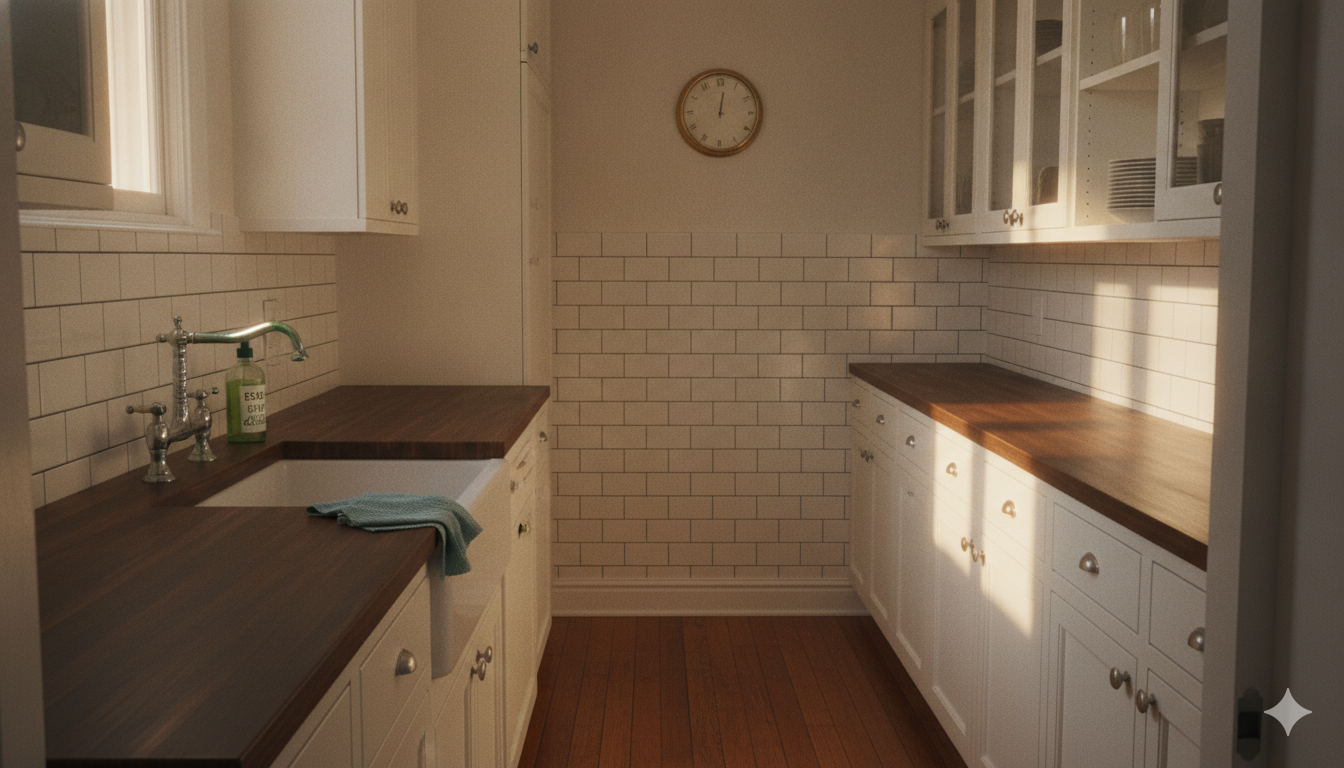
Galley kitchens in pre-war apartments are narrow and efficient, but the original subway tile backsplash is more porous than modern tile and accumulates grease in ways that a quick spray-and-wipe won't address. The chrome fixtures often show significant hard water deposits — especially in buildings with older galvanized pipes.
We treat subway tile grease with an enzyme-based degreaser and a 5-minute dwell time before scrubbing. For hard water on chrome, we use a citric acid solution — effective on mineral buildup but gentler than commercial descalers, which can damage chrome plating with repeated use.
Hex tile floors. Clawfoot tubs. Pedestal sinks. These are the signatures of a pre-war bathroom — and each presents its own cleaning challenge.
Hex tile grout is narrow and porous. Surface cleaners can't reach embedded mineral deposits and grease — you need an oxygen-based or enzyme cleaner with adequate dwell time, then a narrow grout brush. A surface cleaner wiped off in 30 seconds does essentially nothing to embedded buildup; dwell time is everything.
The clawfoot tub's exterior enamel is typically cast iron and is sensitive to abrasives. We clean it with a non-abrasive cream cleanser only — no scrubbing pads, no powder cleansers. The pedestal sink gets the same treatment, with extra attention to the underside of the rim where mineral buildup accumulates.
The living room is often where the pre-war apartment shows its best self: original crown molding, hardwood floors, possibly a decorative fireplace. It's also where dust concentrates more than any other room — because plaster walls and millwork have far more surface area than smooth drywall.
Cast-iron radiators are a particular challenge. Dust accumulates between the fins and literally bakes into the metal during heating season. We clean between the fins with a radiator brush and low-suction vacuum attachment before the main room cleaning. This alone makes a measurable difference in air quality — something our clients in Park Slope and the Upper West Side notice immediately after service.
Original closets in pre-war apartments are typically smaller and have fewer ventilation gaps than modern closets. This leads to odor accumulation and, in some buildings, mild mildew on the back wall — especially in ground-floor and below-grade units.
We use a plant-based antimicrobial spray on the interior walls of closets, let it dwell, then wipe. No bleach or ammonia-based products — these closets often have original painted wood trim that harsh chemicals will discolor over time.
The reason we use eco-friendly cleaning products in pre-war apartments isn't ideological — it's practical. Porous plaster absorbs chemical residue. Residents sleep feet from walls we've just cleaned. Original hardwood finishes are sensitive to solvent-based products. And in buildings where NYC's lead-based paint guidelines apply, we don't use methods that create dust or abrade painted surfaces.
Plant-based degreasers with sufficient dwell time outperform spray-and-wipe chemical products on most pre-war surfaces. Enzyme cleaners dissolve organic buildup that commercial cleaners only spread around. The key variable is always time — eco-friendly products need it, and they reward it.
A standard clean won't reach the accumulation points in a pre-war apartment: behind radiators, inside galley tile grout, the undersides of clawfoot tub rims. Most pre-war apartments benefit from a professional deep clean at least twice a year — before heating season and again in spring.
If you're preparing for a move-in or move-out, or returning home after a summer away, a full deep clean is worth scheduling. Our NYC home cleaning service is specifically trained for older buildings — we bring the right tools and the right approach for surfaces that most cleaning companies have never properly cleaned before.


-01.png)


