


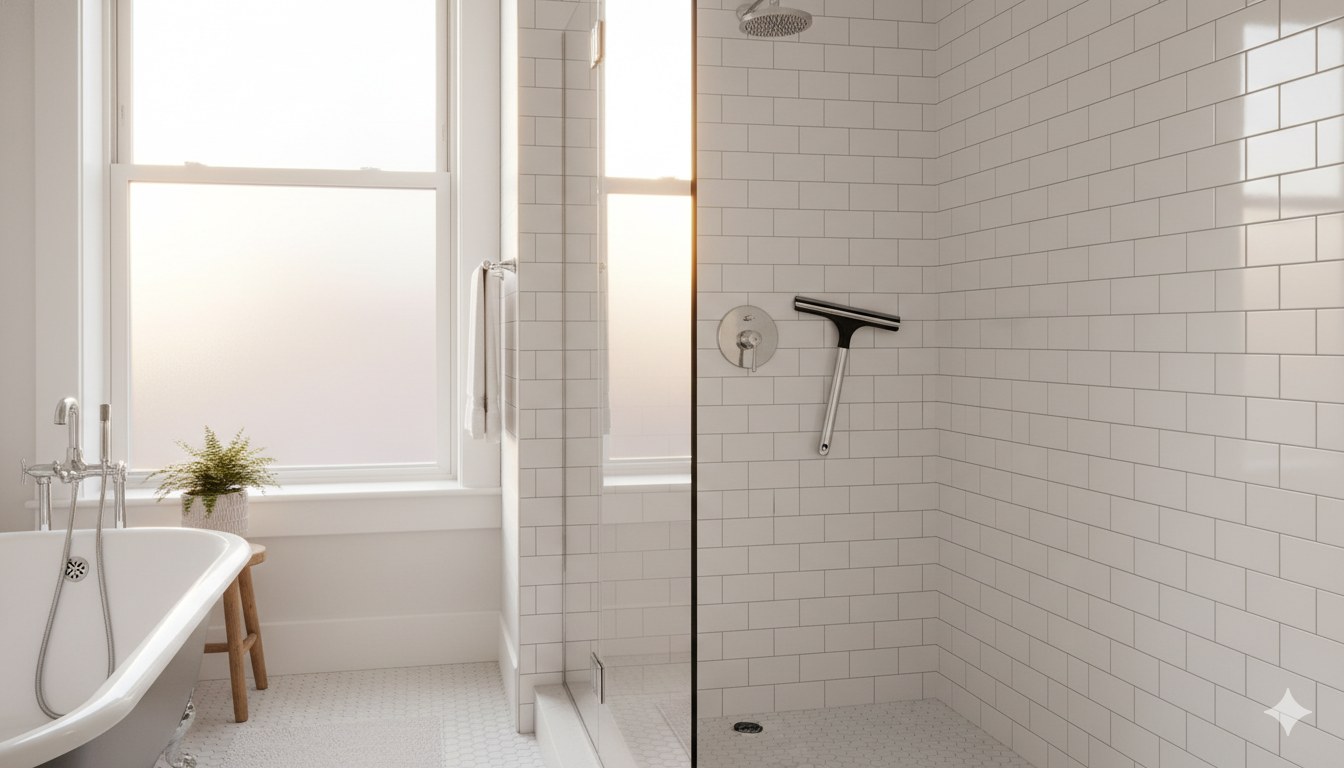
We walk into a lot of NYC bathrooms. Some are in doorman buildings on the Upper West Side, some are in railroad flats in Bushwick, and some are in those beautifully worn prewar co-ops in Jackson Heights where the tile dates back to 1948. But there's one thing nearly all of them have in common: a layer of white, chalky haze on the faucets, showerhead, and tiles that the tenant scrubs every week and can never fully get rid of.
That haze isn't mold. It isn't soap residue. It's mineral deposits — the chalky aftermath of water that carries calcium and magnesium ions, left behind every time water evaporates off a surface. The older the building's pipes, the more concentrated the buildup tends to be.
The frustrating part: regular all-purpose cleaners don't touch hard water stains. They're formulated for dirt and grease, not mineral scale. If you've been cleaning your bathroom faithfully and it still looks dull, this post is for you.
New York City gets most of its water from the Catskill and Delaware watersheds. By national standards, that water is relatively soft — typically around 1.8 grains per gallon of calcium carbonate hardness, according to the NYC DEP's Drinking Water Quality Report. That's the good news.
In areas of the city where Catskill/Delaware water blends with Croton watershed supply, hardness can climb to around 7 grains per gallon — squarely in "moderately hard" territory. And the water still has to travel through your building's pipes. Pre-war buildings — and many postwar ones — have older galvanized steel or copper pipes that add minerals to the water as it passes through. By the time water reaches your shower tiles and evaporates, the mineral load is higher than what came out of the city reservoir.
This effect is especially noticeable in shower stalls with poor ventilation (common in interior NYC bathrooms with no window), bathrooms with older fixtures that collect standing water in grooves and joints, and buildings where pipes haven't been updated since the 1970s or earlier.
When our team does a deep clean on a NYC apartment that hasn't had professional cleaning in a year or more, here's what we typically find in the bathroom:
Shower glass and tile: A white or yellowish haze that doesn't wipe off with a wet cloth. On tile, it fills the texture of the glaze and makes surfaces look perpetually dirty even after mopping. On glass shower doors, it creates a frosted effect that obscures clarity entirely.
Faucets and fixtures: White, crusty buildup around the base of faucets, inside the aerator screen, and around the base of handles. Chrome fixtures look dull and spotted. Over time, this restricts water flow.
Grout lines: Hard water deposits fill porous grout, turning once-white grout to a grayish-white crust. The deposits trap additional soap scum, making grout look stained even when it's been scrubbed repeatedly.
Showerhead: Mineral deposits clog the spray holes, reducing pressure and creating uneven spray patterns. In severe cases we've seen heads running at less than half their original pressure.
Toilet bowl: The waterline often develops a rust-colored or brown ring — the classic NYC toilet ring — which is actually a combination of iron minerals and calcium scale. No amount of bleach makes it go away, because bleach doesn't dissolve mineral deposits.
Using more bleach: Bleach doesn't break down mineral scale. It disinfects the deposit while leaving it entirely intact. Over time, bleach also degrades grout sealant, making the grout more porous and more prone to future staining.
Abrasive scrubbing pads: These micro-scratch the glaze on ceramic tiles. Those scratches give minerals more surface area to grip, compounding the problem with every cleaning.
Hot water rinses: Hot water dissolves grease and soap scum effectively — but it accelerates mineral precipitation, depositing more scale than cold water does.
Using vinegar on natural stone: If your bathroom has marble, travertine, or slate tiles, do not use vinegar or any acid-based cleaner. Acid dissolves calcium carbonate — which is also what natural stone is largely made of. It will etch and permanently dull the surface.
Mineral scale is alkaline (primarily calcium and magnesium carbonate). The most effective way to dissolve it is with something mildly acidic. You don't need harsh chemicals — you need the right pH. Here's what our team uses on ceramic and porcelain tile:
Step 1: Diluted white vinegar soak. Mix equal parts distilled white vinegar and water in a spray bottle. Spray affected surfaces generously and let sit for 15–20 minutes. For faucets and showerheads, soak a cloth in the solution and wrap it around the fixture.
Step 2: Baking soda paste for grout. Make a thick paste of baking soda and a small amount of dish soap. Apply to stained grout lines and scrub with a stiff-bristled brush. The mild abrasive action combined with the acidity already on the surface creates a gentle fizzing reaction that lifts deposits without scratching.
Step 3: Cold water rinse. Cold water (not hot) removes the dissolved minerals and cleaning residue without redepositing scale.
Step 4: Dry immediately. This is the step people skip: dry the surfaces after rinsing. Water droplets that air-dry on tile start the cycle again immediately. A microfiber cloth or squeegee takes about 30 seconds.
For clients who prefer a ready-to-use product, plant-based descalers — including those available through Everneat's eco-friendly home care line — use citric acid derived from natural sources to achieve the same pH chemistry without petrochemical solvents or synthetic fragrances.
Over hundreds of NYC deep cleans, we've learned where hard water buildup concentrates — and where it gets missed most often:
Behind the toilet base: Water splashes during flushing and collects at the floor-wall junction, leaving deposits that are invisible until you look closely. The scale here is often years old.
Under the rim of the toilet bowl: Routinely missed during regular cleaning — deposits accumulate here and harbor bacteria that contribute to bathroom odor.
Inside the showerhead: Unscrew the head (if detachable) and soak overnight in undiluted white vinegar. The clogged spray holes will reopen. This alone can significantly improve shower pressure in an older NYC apartment.
The caulk line at the tub-wall junction: Mineral deposits penetrate porous caulk and are essentially impossible to clean. If the caulk looks gray-brown and is pulling away from the wall, it's time to recaulk — no amount of scrubbing will restore it.
The drain cover: Mineral and hair debris accumulate here and create a secondary odor source. Lift it, soak in vinegar for 30 minutes, and scrub before replacing.
Squeegee after every shower. A 30-second squeegee wipe removes water before it evaporates and leaves minerals behind. This single habit extends the time between deep cleans more than any product can.
Ventilate aggressively. In interior bathrooms with no window, the exhaust fan should run for at least 20 minutes after a shower. Lingering humidity accelerates mineral deposition. Many NYC apartment exhaust fans are old and underpowered — if yours doesn't clear steam quickly, it may be worth upgrading.
Wipe fixtures weekly. A 30-second wipe of faucets and handles with a damp microfiber cloth once a week prevents buildup from hardening into the crusted scale that requires heavy intervention later.
Some mineral deposits have been accumulating for years — especially in apartments that were rented for a long time without professional cleaning. At that point, DIY methods can improve things, but a full reset requires professional tools, the right products, and time.
If you're preparing your apartment for a new tenant, listing it on Airbnb, or simply trying to get the bathroom back to a real baseline, our home cleaning service includes bathroom deep cleaning with specific attention to mineral deposits, grout lines, and fixture restoration — all using non-toxic, eco-friendly supplies.


-01.png)


